
Digital Mailbox vs Traditional Mail for FAA Compliance
March 7, 2026 • Saturday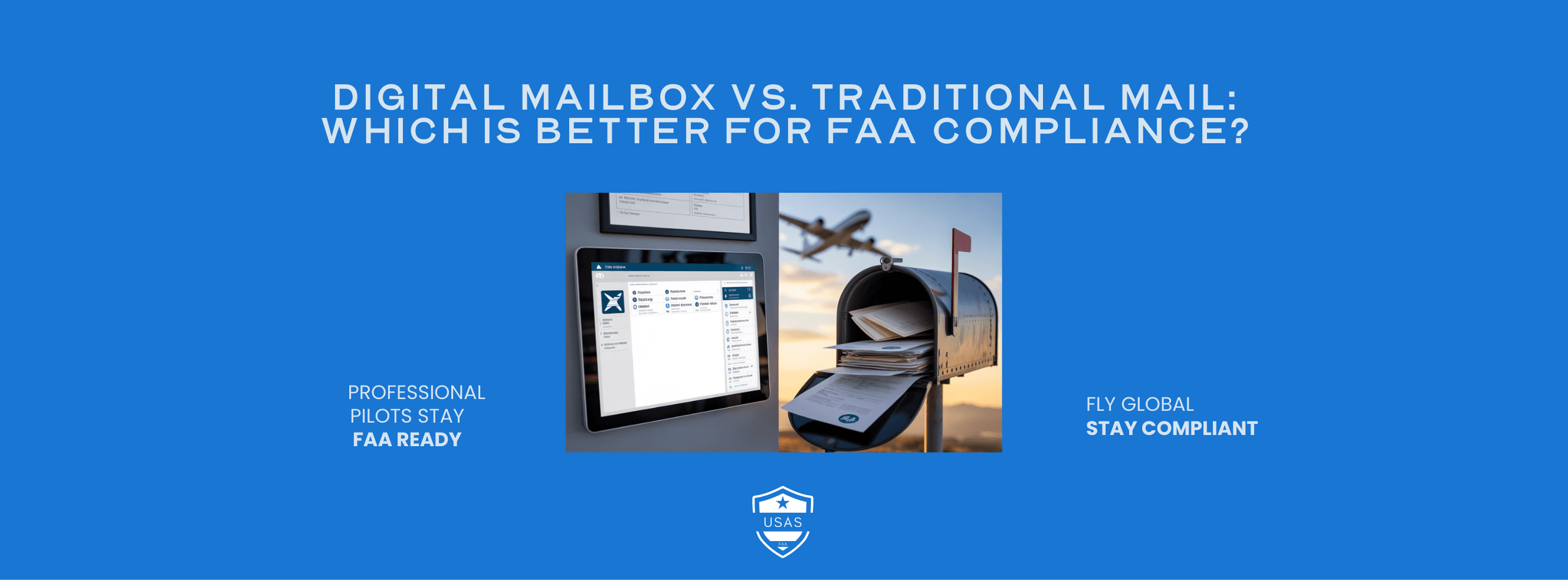
Aviation professionals and pilots must manage their mail carefully to remain compliant with strict Federal Aviation Administration (FAA) regulations. Missing critical FAA correspondence or experiencing delayed document delivery can lead to serious consequences, including fines, grounded aircraft, or even certificate suspension.
In today’s aviation environment, choosing the right mail management solution is essential. This guide compares digital mailbox services and traditional mail systems to determine which option works best for FAA compliance.
You’ll learn how both methods handle time-sensitive regulatory documents, the security features that protect sensitive aviation records, and which solution provides the most reliable and cost-effective approach for aviation professionals.
We’ll also explore the real costs, security standards, and operational advantages of both systems. Many pilots and aviation companies now rely on specialized aviation mail services such as USASFAA, which provide a dedicated U.S. mailing address, digital scanning, and instant notifications designed specifically for FAA compliance.
By the end of this guide, you’ll clearly understand which mail management approach best supports your aviation compliance needs.
Understanding FAA Mail Compliance Requirements
Federal Aviation Administration Mailing Address Regulations
The FAA requires aviation professionals to maintain an accurate and up-to-date mailing address for official correspondence. Pilots, aircraft owners, and aviation businesses must ensure their address in the FAA registry remains current at all times.
Under FAA regulations, address updates must typically be completed within 30 days of a change. Failure to comply can lead to enforcement action, including certificate suspension or revocation.
The FAA Civil Aviation Registry uses this address to send important communications such as:
- Pilot certification updates
- Aircraft registration documents
- Safety notices and enforcement letters
- Medical certificate notifications
Because these documents may affect flight operations, reliable mail delivery is essential. Many aviation professionals therefore use professional mail management services like USASFAA to ensure they never miss critical FAA correspondence.
Why Digital Mailboxes Are Becoming the Preferred Option
Digital mailbox services are transforming how aviation professionals handle regulatory mail.
Instead of waiting days or weeks for traditional postal delivery, a digital mailbox allows users to receive scanned copies of their mail instantly. As soon as an FAA document arrives, the system scans the letter and sends a notification via email or SMS.
This immediate visibility allows pilots and aviation companies to respond quickly to time-sensitive regulatory communications.
With a digital mailbox, aviation professionals benefit from:
- Instant mail notifications
- Secure digital document storage
- Remote access to FAA correspondence from anywhere
- Organized document management for audits and inspections
Companies such as USASFAA specialize in aviation mail solutions designed specifically for FAA compliance needs.
Traditional Mail Challenges in Aviation Compliance
While traditional mail systems have been used for decades, they present several risks when dealing with regulatory communication.
Postal delays can create significant problems when FAA deadlines are involved. Important notices may take several days or even weeks to arrive, reducing the time available to respond to compliance requirements.
Traditional mail also introduces risks such as:
- Lost or misrouted correspondence
- Delayed regulatory notifications
- Physical document storage challenges
- Limited tracking and verification
For aviation professionals operating under strict regulatory timelines, these risks can create unnecessary compliance challenges.
Cost Comparison: Digital Mailbox vs Traditional Mail
When comparing costs, many aviation professionals initially assume traditional mail is cheaper. However, hidden costs quickly accumulate.
Traditional mail requires expenses such as:
- Mail forwarding fees
- Physical mailbox rentals
- Document storage systems
- Administrative time for sorting and filing
Digital mailbox services typically offer a predictable monthly subscription, which often includes mail scanning, document storage, and digital organization tools.
Over time, the efficiency and reliability of digital systems can significantly reduce administrative workload and compliance risks.
Security Features That Protect Aviation Data
Security is another major advantage of digital mail systems.
Digital mailbox providers use advanced technologies such as:
- End-to-end encryption
- Multi-factor authentication
- Secure cloud storage
- Automated backup systems
These protections ensure that sensitive aviation documents remain safe from unauthorized access or data loss.
Traditional mail, on the other hand, offers limited protection beyond physical envelopes and mailbox locks.
Final Verdict: Digital Mailboxes Offer Better FAA Compliance
For aviation professionals, reliable communication with the FAA is essential. Missing a critical notice or responding late to regulatory correspondence can result in costly penalties or operational disruptions.
Digital mailbox solutions significantly reduce these risks by providing instant access to FAA mail, secure document storage, and organized compliance records.
Services such as USASFAA are specifically designed to help pilots, aircraft owners, and aviation businesses maintain full compliance with FAA mailing requirements.
While traditional mail systems still exist, digital mailboxes clearly offer the speed, reliability, and security needed for modern aviation operations.
For pilots and aviation companies looking to simplify compliance and protect their careers, adopting a digital mailbox solution is becoming the smart and future-ready choice.